
At Godfrey Dentistry in Somersworth, NH, we design each crown to fit comfortably and work like a natural tooth. A crown protects the remaining structure of the tooth, helps preserve the jawbone by keeping the natural tooth in place, and stabilizes the teeth next to it. With good home care and regular checkups, many crowns last for decades.
Schedule Your Crown ConsultationCommon Reasons a Tooth May Need a Crown
Teeth can be weakened in many ways, and a crown is often the best way to protect them before a small problem becomes a bigger one. Our team will examine the tooth, review your images, and explain whether a crown is the right solution. Here are some of the most common reasons patients receive a crown.
- A large cavity that is too extensive for a filling to hold
- A cracked, chipped, or fractured tooth that needs added strength
- A tooth that has had root canal therapy and needs protection afterward
- A tooth worn down by grinding, clenching, or years of heavy use
- An old, large filling that is breaking down or leaving too little tooth structure
- A misshapen or severely discolored tooth that needs a cosmetic improvement
- A dental implant that needs a natural looking tooth on top
- An anchor tooth for a dental bridge that replaces a missing tooth
For smaller areas of damage, we may recommend a more conservative option such as a composite filling or inlays and onlays. We always aim to preserve as much of your natural tooth as possible.
Why Patients Choose Dental Crowns
A crown does more than cover a tooth. It protects your investment in your natural teeth and helps you avoid more complex treatment down the road. Patients often value several benefits.
- Strength and protection. A crown surrounds the tooth and helps hold it together, which reduces the risk of further cracking or breaking.
- A natural appearance. Modern materials can be matched to the color, shape, and size of your neighboring teeth.
- Restored biting and chewing. A crown rebuilds the tooth so you can eat comfortably and speak clearly.
- Relief from sensitivity and pain. Covering a weakened or exposed tooth can ease sensitivity and discomfort.
- Stability for nearby teeth. A restored tooth helps keep neighboring teeth from shifting.
- Long lasting results. Many crowns last for years, and some last for decades with proper care.
- Fewer repeat repairs. A well fitted crown can help you avoid repeated fillings on the same tooth.
From First Impression to Final Fit, Your Crown Journey
Getting a crown is a straightforward process, and it typically takes two appointments. Each step is designed to help your crown fit precisely, match your smile, and work well with your bite. Here is what to expect from start to finish.

01
Consultation and Exam
We evaluate the tooth, take digital images when needed, and talk with you about your goals. We explain your options for materials so you can make a confident decision.
02
Impressions of the Tooth and Bite
Impressions are taken of your tooth and your overall bite. This allows us to design a crown that matches the natural shape and size of the tooth and interacts properly with your other teeth.
03
Gentle Tooth Preparation
We numb the area with a local anesthetic so you stay comfortable. Then we remove areas of decay or damage and shape the tooth to hold the crown.
04
A Second Impression for a Precise Fit
Another impression is taken of the prepared tooth. This helps ensure your final restoration fits perfectly.
05
Temporary Crown Placement
We place a temporary restoration on the tooth to protect it while your permanent crown is made.
06
Custom Fabrication
Your permanent crown is created by a dental laboratory known for its artistry and realism, using the impressions and shade details we provide.
07
Fitting and Bonding
When your crown is ready, you return to our office. We check the fit, bite, and color, make any needed adjustments, and bond the crown securely to your tooth.
Choosing the Right Crown Material for Your Tooth
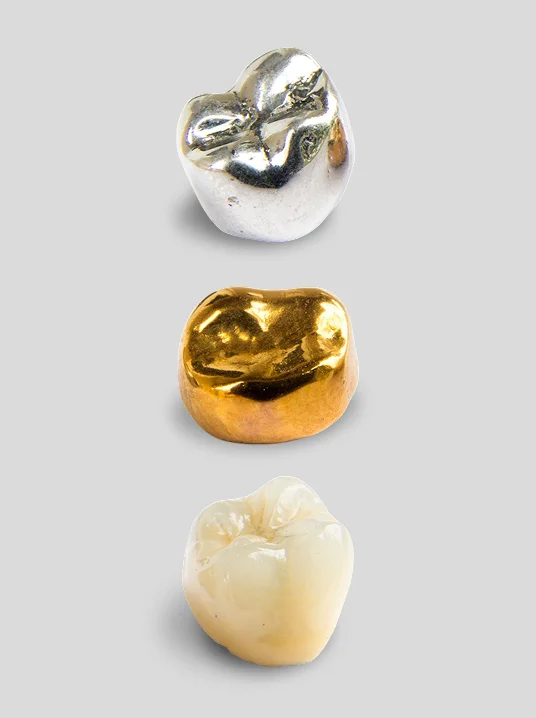
Crowns can be made from several materials, and the right choice depends on the location of the tooth, the way you bite, and your goals for appearance. Not every material suits every patient. We will listen to your preferences, explain the options, and make sure your crown fits properly, feels comfortable, and functions like your natural tooth.
Ceramic Crowns
Ceramic crowns are made from a porcelain material carefully chosen to match your neighboring teeth for a realistic look. They are often recommended for front teeth, and modern ceramic crowns are strong enough to be used in other parts of the mouth as well. A well designed ceramic crown combines science and artistry for natural looking results.
Porcelain Fused to Metal Crowns
A porcelain fused to metal crown has a metal frame covered with dental porcelain. It is popular because it is strong enough to withstand biting and chewing forces, which makes it a good option for molars. The metal framework can sometimes show as a dark line along the gums, so this type is not recommended for front teeth.
Gold Alloy Crowns
Gold alloys have a long history in dentistry because of their exceptional strength. Gold crowns may be recommended for the back teeth of patients who have a history of chronic teeth grinding or jaw clenching.
Base Metal Alloy Crowns
Base metal alloys are strong and resistant to corrosion, and they are often used for molars that might otherwise need to be extracted. They are prized for durability, although they are less commonly used today now that so many natural looking options are available.
Understanding the Cost of a Dental Crown
Many patients want to know what to expect before moving forward, and we are happy to explain. Dental plans often cover crowns in part as a restorative service, although coverage levels and waiting periods vary from plan to plan. Our team will review your benefits, provide a clear estimate, and discuss costs before treatment begins. We accept all dental insurance plans except Medicaid, we are in network with Delta Dental Premier, and we offer financing through Sunbit for care that insurance does not fully cover.
Protect Your Tooth and Keep Your Smile Whole
A damaged tooth rarely heals on its own, and waiting can lead to more pain, more treatment, and higher costs. A custom crown can restore your tooth, protect what remains, and give you a smile that looks and feels like your own. Our team at Godfrey Dentistry in Somersworth, NH is ready to evaluate your tooth and explain your options in plain language. Schedule your visit today.
Frequently Asked Questions
About Dental Crowns
A dental crown is a custom made restoration that covers a tooth to restore its shape, strength, and appearance. A cap is simply another term some people use for a crown, so the two mean the same thing. Crowns are used to protect weakened teeth, restore teeth with large cavities, and cover dental implants. Today’s crowns are designed to look natural and work just like your own teeth.
A tooth usually needs a crown when it has more decay or damage than a filling can safely repair. A filling replaces a small area of tooth, but a crown surrounds the entire visible part of the tooth and holds it together. Teeth that are cracked, heavily worn, or have had a root canal often need this added protection. Our team will examine the tooth and recommend the most conservative option that will last.
The average dental crown lasts about five to 15 years, and many last for decades with proper care. The lifespan depends on the location of the tooth, the material used, and your oral habits. Daily brushing and flossing, regular checkups, and avoiding hard objects can all help a crown last longer. If you grind your teeth, a custom night guard can add valuable protection.
No, you should not feel pain during the procedure. We use a local anesthetic to numb the tooth and surrounding area while the tooth is being prepared. Afterward, it is normal for the tooth to feel slightly sensitive for a short time, and this usually fades quickly. If you have lingering discomfort or your bite feels off, let us know so we can make adjustments.
Dental crowns usually require two appointments. At the first visit, we take impressions, prepare the tooth, and place a temporary crown. On the second visit, we fit and bond your permanent crown after it has been made by a dental laboratory. We will confirm your timeline when you schedule so you know what to expect.
No, not every crown needs a post. A post may be added when a large amount of tooth structure has been removed and there is not enough left to support the crown. Many crowns are placed without one. We will let you know during your consultation whether a post is recommended for your tooth.
Yes, a high quality ceramic crown can blend in naturally with your other teeth. The porcelain is carefully chosen to match the color, shape, and translucency of the teeth around it. Ceramic crowns are often recommended for the front of the mouth because they look so realistic. In most cases, no one will realize you have a crown when you smile.
Many dental plans cover part of the cost of a crown when it is needed to restore a damaged tooth, although coverage levels and waiting periods vary. We accept all dental insurance plans except Medicaid and are in network with Delta Dental Premier. Our team can verify your benefits before treatment and explain your estimated costs.